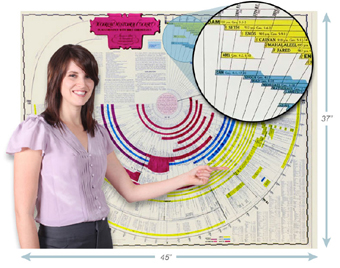
Related articles offer further reading. Each entry’s sources support its specific explanation.
What else was happening?
Read across a time band to explore different regions during the same broad period. Biblical dates follow this resource’s timeline chronology; other dates follow their stated sources and traditions. A shared band shows overlap within that framework, not necessarily the same year or independent confirmation of the Biblical dates.
1254 BC–1200 BC
Egypt
- MerneptahApproximately 1213–1203 BC · Historical estimate
People and events
Saul, Israel’s first king
Approximately 1095–1055 BC, calculated from the chart’s royal bands · Timeline chronology
Biblical account
Saul is introduced as a Benjaminite. First Samuel describes his selection, wars against neighboring peoples, and rejection as king after disobedience.
The rejection did not mean he immediately ceased ruling. This approximate BC range is inferred from the chart’s forty-year bands, not explicitly printed accession dates or dates stated in Samuel.
Dates: The chart’s traditional royal dates are distinct from modern historical chronologies.
Word help: Accession
- Accession
- The beginning of a ruler’s time in power.
Context, sources and timeline wording
On the Amazing Bible Timeline with World History
SAUL — chosen King. — Saul wars against the Ammonites, Moabites, Syria, Idumea and Philistines. — Saul loses the kingdom.
Selected label(s) from the corresponding poster track; joined fragments share this quotation and explanation.
Compare 1100 BC–1004 BCReading options
From the tribes and judges to kings
Saul, David and Solomon: the chart’s three royal bands · Timeline chronology
Biblical account
Israel’s story moves from the tribes and judges into the successive reigns of Saul, David and Solomon. This timeline uses three forty-year royal bands within its Biblical chronology; the rulers are successive, not contemporaries.
Context: The combined traditional range extends into the next period.
Word help: Reign
- Reign
- The time a king, queen or other ruler holds power. These are not necessarily the years of that person’s life.
Context, sources and timeline wording
On the Amazing Bible Timeline with World History
The Time of the Judges. — The Three First Kings. — The Twelve tribes of ISRAEL
Selected label(s) from the corresponding poster track; joined fragments share this quotation and explanation.
Compare 1100 BC–1004 BCReading options
David’s anointing and reign
Approximate reign calculation from the chart: 1055–1015 BC · Timeline chronology
Biblical account
Samuel anoints David before Saul’s death. David later rules Judah at Hebron and then all Israel at Jerusalem; Second Samuel 5 gives a total reign of forty years.
His victories and royal establishment unfold over that reign. The early anointing is not the same event as accession over all Israel.
Dates: The traditional reign range is not the date of Samuel’s earlier anointing.
Word help: Reign · Accession
- Reign
- The time a king, queen or other ruler holds power. These are not necessarily the years of that person’s life.
- Accession
- The beginning of a ruler’s time in power.
Context, sources and timeline wording
On the Amazing Bible Timeline with World History
DAVID Anointed King. — David subdues all neighboring tribes, and leads Israel into great prosperity.
Selected label(s) from the corresponding poster track; joined fragments share this quotation and explanation.
Compare 1100 BC–1004 BCReading options
David and the neighboring kingdoms
Within David’s reign · Timeline chronology
Biblical account
Second Samuel 8 and 10 recount campaigns involving Edom, Moab, Ammon and Aramean kingdoms. Toi of Hamath sends gifts after David defeats Hadadezer.
These are the specific Biblical connections beneath the chart’s Esau, Moab–Ammon and Syria tracks, not claims that the ancient regions match today’s national borders.
Word help: Reign
- Reign
- The time a king, queen or other ruler holds power. These are not necessarily the years of that person’s life.
Context, sources and timeline wording
On the Amazing Bible Timeline with World History
DAVID subdues Edomites. — DAVID smites the Ammonites and Moabites. — King TOI — DAVID smites the SYRIANS
Selected label(s) from the corresponding poster track; joined fragments share this quotation and explanation.
Compare 1100 BC–1004 BCReading options
Hiram and David
Within David’s reign · Timeline chronology
Biblical account
Second Samuel 5:11 describes Hiram of Tyre sending cedar, carpenters and masons to build David’s house. First Kings 5 recalls Hiram’s friendship with David when Solomon begins his own building plans.
Word help: Reign
- Reign
- The time a king, queen or other ruler holds power. These are not necessarily the years of that person’s life.
Context, sources and timeline wording
On the Amazing Bible Timeline with World History
HIRAM allied with DAVID
Selected label(s) from the corresponding poster track; joined fragments share this quotation and explanation.
Compare 1100 BC–1004 BCReading options
Merneptah
Approximately 1213–1203 BC · Historical estimate
Egypt
Merneptah succeeded Ramesses II near the end of the thirteenth century BC. The approximate 1213–1203 reign used in the Met’s Iron Age study is earlier than the poster’s 1180 label.
Egyptian chronological tables can differ by several years.
Dates: The poster gives 1180; the cited reign dates are earlier.
Word help: Reign
- Reign
- The time a king, queen or other ruler holds power. These are not necessarily the years of that person’s life.
Context, sources and timeline wording
On the Amazing Bible Timeline with World History
MERNEPTAH rules 1180
Selected label(s) from the corresponding poster track; joined fragments share this quotation and explanation.
Compare 1254 BC–1200 BCReading options
The Trojan War tradition
About 1184 BC in the chart’s Greek chronology · Traditional dating
Mediterranean
The Trojan War belongs to Greek epic tradition. Archaeology establishes a long sequence of settlement and destruction at Troy, but does not verify every episode in Homer or a single exact year for the epic conflict.
The approximately 1184 BC placement follows traditional Greek dating, not the Biblical framework.
Dates: The date is traditional, not an exact archaeological result.
Context, sources and timeline wording
On the Amazing Bible Timeline with World History
TROJAN WAR (about 1184)
Selected label(s) from the corresponding poster track; joined fragments share this quotation and explanation.
Compare 1200 BC–1100 BCReading options
Ramesses III and the Sea Peoples
Approximately 1184–1153 BC · Historical estimate
Egypt
Ramesses III fought wars against Libyans and groups conventionally called the Sea Peoples. His Medinet Habu temple preserves the royal commemoration.
Egypt’s antiquities ministry uses approximately 1184–1153 BC for his reign.
Word help: Reign
- Reign
- The time a king, queen or other ruler holds power. These are not necessarily the years of that person’s life.
Context, sources and timeline wording
On the Amazing Bible Timeline with World History
RAMSES III Wars with sea powers.
Selected label(s) from the corresponding poster track; joined fragments share this quotation and explanation.
Compare 1200 BC–1100 BCReading options
Tiglath-pileser I and Assyrian power
Approximately 1114–1076 BC · Historical estimate
Mesopotamia
Assyrian royal inscriptions describe Tiglath-pileser I’s campaigns and building works. The British Museum dates a prism of his reign to 1114–1076 BC.
These royal accounts are evidence for Assyria’s claims and expansion, not neutral descriptions of every conquered people.
Word help: Reign · Mesopotamia
- Reign
- The time a king, queen or other ruler holds power. These are not necessarily the years of that person’s life.
- Mesopotamia
- The region around the Tigris and Euphrates rivers, largely in present-day Iraq and neighboring areas.
Context, sources and timeline wording
On the Amazing Bible Timeline with World History
ASSYRIAN POWER increased under Tiglath-Pileser I
Selected label(s) from the corresponding poster track; joined fragments share this quotation and explanation.
Compare 1200 BC–1100 BCCompare 1100 BC–1004 BCReading options
Egypt after the New Kingdom
Third Intermediate Period, approximately 1070–664 BC · Historical estimate
Egypt
Egypt’s later rulers shared or competed for power among several centers during the Third Intermediate Period. The poster’s broad dynasty bands and “Time of decay” summarize political fragmentation, not an absence of cultural or artistic achievement.
Dynasties 19–22 do not fit neatly into a single 1200–775 interval.
Context: Dynasty boundaries differ from the poster’s compressed range.
Word help: Dynasty
- Dynasty
- A line of rulers, usually from the same family. A dynasty’s dates describe its rule, not one person’s lifetime.
Context, sources and timeline wording
On the Amazing Bible Timeline with World History
Dynasties 19-22 1200-775 — Time of decay
Selected label(s) from the corresponding poster track; joined fragments share this quotation and explanation.
Compare 1100 BC–1004 BCReading options
The beginning of Zhou rule
Western Zhou, approximately 1050–771 BC · Historical estimate
East Asia
Zhou rulers replaced the Shang in the mid-eleventh century BC. Western Zhou bronze inscriptions and objects provide evidence beyond later literary traditions.
Museum chronologies use approximately 1050 or 1046 for the transition; this precision should not be mistaken for an undisputed exact year.
Context, sources and timeline wording
On the Amazing Bible Timeline with World History
ZHOU Dynasty
Selected label(s) from the corresponding poster track; joined fragments share this quotation and explanation.
Compare 1100 BC–1004 BCReading options
Families, traditions and undated themes
Explore family lines, successive Biblical episodes, cultural traditions and themes spanning several generations. Their date lines identify the kind of connection and any uncertainty.
Jephthah and the later judges
Judges 10–12: a sequence, not simultaneous reigns
Biblical account
Judges recounts Ammonite oppression and Jephthah’s deliverance, followed by Ibzan, Elon and Abdon. Judges 12 gives their successive judgeships as six, seven, ten and eight years respectively.
These durations do not by themselves establish BC dates.
Word help: Reign
- Reign
- The time a king, queen or other ruler holds power. These are not necessarily the years of that person’s life.
Context, sources and timeline wording
On the Amazing Bible Timeline with World History
AMMONITES — Jephthah — IBEZAN — ELON — ABDON
Selected label(s) from the corresponding poster track; joined fragments share this quotation and explanation.
Other families and themesReading options
Samson and the Philistines
Judges 13–16
Biblical account
Judges 13 describes forty years of Philistine oppression. Samson’s twenty years as judge occur during Philistine domination, not necessarily after all forty years had ended.
This is an important example of overlapping sequences in the book of Judges.
Context: Durations in Judges can overlap; simply adding every band can mislead.
Context, sources and timeline wording
On the Amazing Bible Timeline with World History
PHILISTINES — SAMSON Judge — PHILISTINES RULE ISRAEL
Selected label(s) from the corresponding poster track; joined fragments share this quotation and explanation.
Other families and themesReading options
Eli and the ark’s capture and return
1 Samuel 4–7
Biblical account
Eli had judged Israel for forty years when the ark was captured and his sons died. First Samuel 5–6 follows the ark through Philistine cities and its return after seven months.
Eli’s death, the capture and the return are related events, not one event on one day.
Context, sources and timeline wording
On the Amazing Bible Timeline with World History
ELI Judge — Ark of the Covenant taken and returned
Selected label(s) from the corresponding poster track; joined fragments share this quotation and explanation.
Other families and themesReading options
Samuel’s judgeship
1 Samuel 7
Biblical account
Samuel’s work as judge includes Mizpeh, a yearly circuit through Bethel, Gilgal and Mizpeh, and his home at Ramah. The chart’s “of Ephraim” refers to his regional setting; it need not settle his genealogy.
Word help: Genealogy
- Genealogy
- An account of family descent: who is related to whom across generations.
Context, sources and timeline wording
On the Amazing Bible Timeline with World History
SAMUEL Judge — of Ephraim. 1 Sam. 7:2-16.
Selected label(s) from the corresponding poster track; joined fragments share this quotation and explanation.
Other families and themesReading options
Deborah and Barak
Judges 4–5
Biblical account
Deborah is the prophetess and judge who summons Barak from Kedesh in Naphtali. Barak leads the troops against Sisera.
Reading both names together preserves the roles described in the Biblical account.
Context: Deborah’s judgeship and Barak’s military leadership are distinct roles.
Context, sources and timeline wording
On the Amazing Bible Timeline with World History
DEBORAH the Prophetess. — BARAK Judge of tribe of Naphthali.
Selected label(s) from the corresponding poster track; joined fragments share this quotation and explanation.
Other families and themesReading options
Gideon and Midianite oppression
Judges 6–8
Biblical account
Judges 6 describes seven years of Midianite oppression and identifies Gideon’s family with Manasseh. Gideon’s deliverance belongs to this episode.
The chart’s Ham track is a genealogical organizing device, not a modern classification of peoples by race.
Word help: Genealogy
- Genealogy
- An account of family descent: who is related to whom across generations.
Context, sources and timeline wording
On the Amazing Bible Timeline with World History
GIDEON Judge of Manasseh. — ISRAEL under Midianites — MIDIANITES SUBDUED Israel for 7 years
Selected label(s) from the corresponding poster track; joined fragments share this quotation and explanation.
Other families and themesReading options
Tola and Jair
Judges 10:1–5
Biblical account
Tola is described as a man of Issachar who judges for twenty-three years; Jair is a Gileadite who judges for twenty-two. The poster’s “Gideonite (of Judah)” beside Jair does not match the wording of Judges 10:3.
Context: Judges calls Jair a Gileadite, not a Gideonite.
Context, sources and timeline wording
On the Amazing Bible Timeline with World History
TOLA Judge of Issachar tribe. — JAIR Judge a Gideonite (of Judah).
Selected label(s) from the corresponding poster track; joined fragments share this quotation and explanation.
Other families and themesReading options
Abimelech at Shechem
Judges 9
Biblical account
Abimelech, Gideon’s son, is made king at Shechem after killing his brothers. Judges 9 describes his three-year rule and violent downfall; he is not one of the later united-monarchy kings.
Context, sources and timeline wording
On the Amazing Bible Timeline with World History
ABIMELECH made king
Selected label(s) from the corresponding poster track; joined fragments share this quotation and explanation.
Other families and themesReading options
Solomon and Absalom in David’s household
2 Samuel 12 and 15–18
Biblical account
Solomon is born to David and Bathsheba in 2 Samuel 12. Absalom is a different son of David whose rebellion is told in chapters 15–18.
The nearby labels are separate family stories, not an assertion that both events happened together.
Context, sources and timeline wording
On the Amazing Bible Timeline with World History
SOLOMON is born — ABSOLOM
Selected label(s) from the corresponding poster track; joined fragments share this quotation and explanation.
Other families and themesReading options
Sabbatical years and Jubilee
Leviticus 25
Biblical teaching
Leviticus 25 prescribes a seventh-year rest for the land and a Jubilee after seven cycles of seven years. The long chart track illustrates this recurring pattern; it is not a dated record proving that every cycle was observed throughout Israel’s history.
Context, sources and timeline wording
On the Amazing Bible Timeline with World History
Sabbatical and Jubilee Years. Lev. 25:1-17.
Selected label(s) from the corresponding poster track; joined fragments share this quotation and explanation.
Other families and themesReading options
Ishmael’s continuing family track
A genealogical connection, not a later lifespan
Biblical account
Genesis 25 lists Ishmael’s sons and gives his lifespan as 137 years. His name continues as a family heading on the chart; it does not mean he personally lived through the judges or kings.
Word help: Genealogy
- Genealogy
- An account of family descent: who is related to whom across generations.
Context, sources and timeline wording
On the Amazing Bible Timeline with World History
ISHMAEL
Selected label(s) from the corresponding poster track; joined fragments share this quotation and explanation.
Other families and themesReading options
David and Goliath
1 Samuel 17, before David becomes king
Biblical account
First Samuel 17 recounts David’s confrontation with the Philistine champion Goliath during Saul’s reign. The story belongs before David’s kingship, not within a later campaign merely because it shares his name.
Word help: Reign
- Reign
- The time a king, queen or other ruler holds power. These are not necessarily the years of that person’s life.
Context, sources and timeline wording
On the Amazing Bible Timeline with World History
DAVID AND GOLIATH I Sam. 17
Selected label(s) from the corresponding poster track; joined fragments share this quotation and explanation.
Other families and themesReading options
Tyre and western maritime trade
Different stages of Phoenician seafaring
Levant
Tyre became a major Phoenician port. Western Mediterranean trading settlements expanded especially in the first millennium BC.
The much broader claim about German and British coasts should not be read as a securely dated voyage or established trade route in this period.
Dates: The northern-European trade label lacks a specific documented voyage or date.
Word help: Levant
- Levant
- The eastern Mediterranean region. Its boundaries vary by context; it is not the name of one present-day country.
Context, sources and timeline wording
On the Amazing Bible Timeline with World History
TYRE principle sea-coast town. — Trades with German and Britain coasts
Selected label(s) from the corresponding poster track; joined fragments share this quotation and explanation.
Other families and themesReading options
Babylonia and Assyria
Changing control, not one continuous command
Mesopotamia
Babylonia passed through changing dynasties and conflicts with Assyria. The short “Native Kings under Assyrian command” label does not identify a particular ruler or continuous interval of control.
Nimrod is a Biblical genealogy heading on the continuing regional track, not a king reigning throughout this period.
Dates: No continuous Assyrian command is assigned from this undated label.
Word help: Dynasty · Reign · Mesopotamia · Genealogy
- Dynasty
- A line of rulers, usually from the same family. A dynasty’s dates describe its rule, not one person’s lifetime.
- Reign
- The time a king, queen or other ruler holds power. These are not necessarily the years of that person’s life.
- Mesopotamia
- The region around the Tigris and Euphrates rivers, largely in present-day Iraq and neighboring areas.
- Genealogy
- An account of family descent: who is related to whom across generations.
Context, sources and timeline wording
On the Amazing Bible Timeline with World History
Native Kings under Assyrian command
Selected label(s) from the corresponding poster track; joined fragments share this quotation and explanation.
Other families and themesReading options
Aeneas and the origins of Rome
Roman foundation legend
Mediterranean
Roman tradition connects Aeneas, a survivor of Troy, with Latium and the foundation of Lavinium. In Livy’s account, his son Ascanius founds Alba Longa.
The poster already identifies its story as a legend, but attributes the second city to Aeneas.
Context: In Livy, Alba Longa is founded by Ascanius, not Aeneas.
Context, sources and timeline wording
On the Amazing Bible Timeline with World History
AENEAS, a Trojan, led a colony to Latium and built the town of Alba Longa. (A legend).
Selected label(s) from the corresponding poster track; joined fragments share this quotation and explanation.
Other families and themesReading options
Cecrops and Athens
Athenian foundation tradition
Mediterranean
Cecrops belongs to the legendary early kings of Athens. Ancient accounts connect him with the beginnings and naming of the city; the poster’s citadel label should be read as a foundation tradition, not a securely dated building record.
Context, sources and timeline wording
On the Amazing Bible Timeline with World History
CECROPS founds the citadel of ATHENS
Selected label(s) from the corresponding poster track; joined fragments share this quotation and explanation.
Other families and themesReading options
Indo-European languages and Sanskrit
Language relationships, not a single migration event
South and West Asia
Sanskrit is an ancient Indo-Aryan language within the Indo-European language family. It is related to European branches, not the direct ancestor of all European languages.
“Indo-German” is an older label for this broad language family, not a biological racial classification.
Context: Related languages are not all descended from Sanskrit.
Context, sources and timeline wording
On the Amazing Bible Timeline with World History
INDO-GERMAN TRIBES — SANSKRIT (Probably the fundamental of all European languages)
Selected label(s) from the corresponding poster track; joined fragments share this quotation and explanation.
Other families and themesReading options
Zoroaster and the Indo-European language headings
Zoroaster’s date is disputed · Dating debated
West Asia
Zoroaster is the Iranian religious teacher associated with the origins of Zoroastrianism. His date is disputed; linguistic arguments often place him in the second millennium BC.
The poster’s probable 2200 BC date is not an established consensus. “Indo-German” is an older label related to Indo-European language classification, not a single dated tribe or biological race.
Dates: The date remains uncertain, and language-family terms are not racial categories.
Context, sources and timeline wording
On the Amazing Bible Timeline with World History
INDO-GERMAN TRIBES — Doctrine of Zoroaster (probably 2200 B.C.)
Track heading and doctrine annotation joined with a dash.
Other families and themesReading options
Court and building practices in China
Broad social labels, not dated inventions
East Asia
Chinese ritual traditions describe ranked wives and concubines at elite courts; that does not mean every household practiced polygyny. The poster also has the short labels “Eunic system” and “Brick and stone works.” They identify no ruler, building or date.
The first may refer to eunuchs, but that interpretation and a specific origin date cannot be established from the label alone.
Dates: These undated phrases are retained; they are not treated as inventions securely dated to this period.
Context, sources and timeline wording
On the Amazing Bible Timeline with World History
Eunic system — Polygamy practiced — Brick and stone works
Selected label(s) from the corresponding poster track; joined fragments share this quotation and explanation.
Other families and themesReading options