Christian history
Sylvester II
999–1003
Church history
Sylvester II, pope, 999-1003
Context, sources and timeline wording
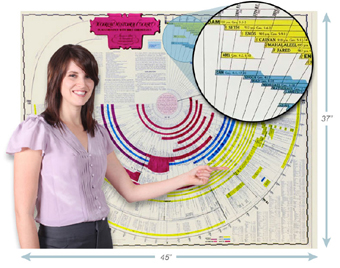
On the Amazing Bible Timeline with World History
SYLVESTER II 1003
Crusades, Mali and Song China
Quick key: BC years count down; AD years count up. “About” means approximate. Dates and label meanings · Words used here
Bible and world history
Explore church history alongside developments in Europe, Africa, Asia, and the Americas. Explore the people and events through short explanations and sources.
Related articles offer further reading. Each entry’s sources support its specific explanation.
Choose by dates or by the people and subjects below. Early Biblical dates follow this resource’s timeline chronology.
Start with these entries, then explore the wider-world comparison. These are reading pointers, not a scale of elapsed time or a complete list of events.
Within each time band, the cards are grouped by region or church history. Dates in the card headings follow the explanation, with relevant poster dates available in each entry’s notes. Longer developments, adjacent-period corrections, and undated notes have their own sections below; none are hidden.
Events and reigns beginning or continuing around the early eleventh century.
999–1003
Church history
Sylvester II, pope, 999-1003
On the Amazing Bible Timeline with World History
SYLVESTER II 1003
1046–1047
Church history
Clement II, pope, 1046-1047
On the Amazing Bible Timeline with World History
CLEMENT II 1046
By 1030
Middle East and neighboring regions
By the end of Mahmud of Ghazni's reign in 1030, Ghaznavid power held a permanent foothold in the western Punjab; later rulers expanded Muslim rule farther across northern India. The poster says 'Mohammedans take India 1030.'
On the Amazing Bible Timeline with World History
Mohammedans take India 1030
Terminology and scope correction
Around 1000
Africa
Ghana Empire reaches a major period of power in the trans-Saharan gold trade around AD 1000.
On the Amazing Bible Timeline with World History
Height of Empire of Ghana 1000
Approximate date clarified
About 1000 · Historical estimate
Americas
Norse voyagers establish a settlement at L'Anse aux Meadows around AD 1000. Later Icelandic sagas associate the North American voyages with Leif Erikson.
On the Amazing Bible Timeline with World History
1000 Leif Ericson reaches North America
Archaeology and later tradition distinguished
1044
East Asia
The Chinese military compendium Wujing Zongyao records early gunpowder formulas, 1044.
On the Amazing Bible Timeline with World History
Gunpowder used
Specific dated evidence added
Compare developments during the later eleventh century. Reigns may continue into the next band.
1058/1059–1061
Church history
Nicholas II, pope, 1058/1059-1061
On the Amazing Bible Timeline with World History
NICHOLAS II 1059
1073–1085
Church history
Gregory VII, pope, 1073-1085
On the Amazing Bible Timeline with World History
GREGORY VII 1073
1059
Church history
Papal Election Decree under Nicholas II regularizes the election process and gives cardinal bishops the leading role, April 1059
On the Amazing Bible Timeline with World History
Decree of election of popes
Event identified and dated
1088–1099
Church history
Urban II, pope, 1088-1099
On the Amazing Bible Timeline with World History
URBANE II 1088
Name, role, and date range clarified
1099–1118
Church history
Paschal II, pope, 1099-1118
On the Amazing Bible Timeline with World History
PASCHALIS II 1099
Name, role, and date range clarified
1054 within a longer separation
Church history
The mutual excommunications of 1054 become a symbol of the East-West Schism, but the separation between the Greek East and Latin West develops over centuries rather than occurring totally in one year.
On the Amazing Bible Timeline with World History
Total separation of Greek and Roman Church 1054
Process and scope clarified
1096–1099
Church history
First Crusade, 1096-1099
On the Amazing Bible Timeline with World History
First Crusade 1096
1081–1118
Europe
Alexius I Komnenos, Byzantine emperor, 1081-1118.
On the Amazing Bible Timeline with World History
Alexius I 1081
From 1069
East Asia
Wang Anshi launches the New Policies under Emperor Shenzong, beginning in 1069, including state crop loans and broader fiscal and administrative reforms. The poster's label 'state socialism' is an anachronistic interpretation.
On the Amazing Bible Timeline with World History
State socialism (scheme) by Wang-An-Shih
Anachronistic label replaced with named reforms
Events during the early twelfth century.
1147–1149
Church history
Second Crusade, 1147-1149. The poster gives 1140; standard chronology places the campaign in 1147-1149.
On the Amazing Bible Timeline with World History
Second Crusade 1140
Date correction
1118
Europe
Alfonso I of Aragon captures Zaragoza from Almoravid rule after a siege, 1118.
On the Amazing Bible Timeline with World History
Arabs driven from Saragossa by King Alfonso I of Aragon 1118
Place name and historical scope clarified
Events during the later twelfth century.
1154–1159
Church history
Adrian IV, pope, 1154-1159
On the Amazing Bible Timeline with World History
ADRIAN IV 1154
1159–1181
Church history
Alexander III, pope, 1159-1181
On the Amazing Bible Timeline with World History
ALEXANDER III 1181
1159–1164
Church history
Victor IV, antipope, 1159-1164, during the contested election of Alexander III
On the Amazing Bible Timeline with World History
VICTOR IV 1159
Role correction and date range added
1189–1192
Church history
Third Crusade, 1189-1192
On the Amazing Bible Timeline with World History
Third Crusade 1189
1187
Middle East and neighboring regions
Saladin captures Jerusalem from the Latin Kingdom of Jerusalem, 1187.
On the Amazing Bible Timeline with World History
Jerusalem taken from the Christians by Saladin 1187
Historical actors clarified
Twelfth century; traditionally about 1168–1170 · Historical estimate
Americas
Tula declines during the twelfth century. Later traditions place its fall around 1168-1170 and connect it with migrations and conflict; the specific causes remain debated.
On the Amazing Bible Timeline with World History
1170's Toltecs driven out of capital at Tula
Evidence and later tradition distinguished
Events during the first half of the thirteenth century. Some developments continue beyond 1250.
1229
Church history
Council of Toulouse issues regional anti-heresy measures, including restrictions on lay possession of biblical books, 1229.
On the Amazing Bible Timeline with World History
Council of Toulouse 1229
1227–1241
Church history
Gregory IX, pope, 1227-1241
On the Amazing Bible Timeline with World History
GREGORY IX 1227
1233
Church history
Pope Gregory IX delegates inquisitorial duties in southern France to Dominican friars in April 1233. Earlier papal inquisitors already existed, so this marks an important institutional expansion rather than a single universal founding date.
On the Amazing Bible Timeline with World History
1233 Order of Dominicans Inquisition formally established
Historical clarification
1243–1244; expanded in 1256
Church history
Order of Saint Augustine formally organized in 1243-1244; expanded through the Grand Union of 1256 (historically called the Austin Friars in England)
On the Amazing Bible Timeline with World History
Order of Austin Friars
Name and dates clarified
1202–1204
Church history
Fourth Crusade, 1202-1204; Crusaders reach Constantinople in 1203 and sack the city in 1204
On the Amazing Bible Timeline with World History
Fourth Crusade 1203
1217–1221
Church history
Fifth Crusade, 1217–1221; the Egyptian campaign begins in 1218. The poster gives 1222.
On the Amazing Bible Timeline with World History
Fifth Crusade 1222
Campaign dates and Egyptian phase distinguished
Sixth: 1228–1229; Seventh: 1248–1250
Church history
Sixth Crusade, 1228-1229. The poster's 'Sixth Crusade 1248' conflates it with the Seventh Crusade, 1248-1250.
On the Amazing Bible Timeline with World History
Sixth Crusade 1248
Event number and date correction
1249
Europe
Portugal's final conquest of the Algarve is associated with Afonso III in 1249. The poster says 'Alphonso IX of Portugal drives the Arabs from Algarve 1212'.
On the Amazing Bible Timeline with World History
Alphonso IX of Portugal drives the Arabs from Algarve 1212
The ruler and date differ from the poster
1204–1261
Europe
Latin Empire established in Constantinople after the Fourth Crusade, 1204; it lasts until 1261.
On the Amazing Bible Timeline with World History
Establishment of Latin Empire 1204
Duration and cause added
Reign approximately 1235–1255 · Historical estimate
Africa
Sundiata Keita founds the Mali Empire and rules approximately 1235-1255; exact life dates are uncertain and preserved chiefly through later oral tradition.
On the Amazing Bible Timeline with World History
Sundiata Keita; Mali's Lion Prince 1217-1260
Approximate dates and oral tradition clarified
Approximately thirteenth century · Historical estimate
Americas
Early Inca communities develop around Cuzco by approximately the thirteenth century; later traditions preserve foundation narratives for the city and dynasty.
On the Amazing Bible Timeline with World History
1200 Incas in Peru city of Cuzco
Approximate date and tradition clarified
After about 1200 · Historical estimate
Americas
The Chimu state centered at Chan Chan expands along Peru's north coast after about 1200; the poster marks this expansion around 1250.
On the Amazing Bible Timeline with World History
1250 Chimu people expand in Peru
Approximate date clarified
These civilizations, traditions, and transitions cover longer spans. They are not single-year events.
Later eleventh century; recognition in 1113
Church history
The Order of Malta's history places the Hospitaller community's origin in the second half of the eleventh century and its formal papal recognition in 1113. The poster gives 1048 for the founding of the Order.
On the Amazing Bible Timeline with World History
ORDER OF MALTA FOUNDED 1048
Date clarification
Multiple episodes; poster span 1087–1294
Europe
Anti-Jewish violence accompanied the Crusades, and England expelled its Jewish population in 1290. Experiences varied substantially by place and time.
The poster summarizes 1087-1294 as a period when Jews were 'terribly persecuted.' This broad label covers distinct episodes and settings.
On the Amazing Bible Timeline with World History
JEWS terribly persecuted, 1087-1294
Scope and wording clarification
750–1258; Baghdad from 762
Middle East and neighboring regions
Abbasid dynasty begins in 750; Baghdad becomes the caliphal capital in 762. Mongol forces capture Baghdad in 1258, ending Abbasid rule there.
On the Amazing Bible Timeline with World History
Abbasids' residence at Baghdad 750-1258
Capital date and scope clarified
Thirteenth century and 1295; different rulers
Middle East and neighboring regions
Some Mongol rulers and khanates adopt Islam at different times: Berke converts in the thirteenth century, while Ghazan establishes Islam in the Ilkhanate in 1295. There was no single conversion of all Mongols.
On the Amazing Bible Timeline with World History
Mongols embrace the Mussalman faith
Terminology and overgeneralization corrected
Gradual adoption; not one conversion in 1235
Africa
Islam is present among merchants and some elites in the western Sudan before and during Mali's rise. Sundiata's own religious affiliation is debated, and elite adoption develops over time rather than in a single conversion in 1235.
On the Amazing Bible Timeline with World History
Leaders of Mali converted to Islam 1235
Single-date conversion claim corrected
About 1100–1450 · Historical estimate
Africa
Great Zimbabwe's monumental stone complexes are built and expanded over several centuries, approximately 1100-1450; 1250 falls within this longer development.
On the Amazing Bible Timeline with World History
Stone houses of Zimbabwe constructed 1250
Construction range replaces single year
About 500 BC onward · Historical estimate
Americas
Monte Albán develops as a Zapotec center from about 500 BC and declines during the ninth century AD. Mitla grows in importance afterward and reaches its height around 1200.
The poster summarizes the longer Zapotec span as 400 BC–AD 1500; that range is not the lifespan of a single city or of the Zapotec people.
On the Amazing Bible Timeline with World History
400 BC – 1500 AD: Zapotecs (Monte Alban, Miktla)
Poster spelling Miktla; reader text uses Mitla.
Changing Zapotec centers distinguished
About 850–1250 · Historical estimate
Americas
Ancestral Pueblo communities in the Chaco region build great houses with kivas, especially about 850-1250. The poster describes part of this development as 'Pueblo inhabitants build circular rooms, 900-1100.'
On the Amazing Bible Timeline with World History
900-1100 Pueblo inhabitants build circular rooms
Terminology and date clarification
Ninth–tenth centuries and later
Americas
Many Classic Maya political centers declined at different times, especially around the ninth and tenth centuries, while Maya societies continued into the Postclassic period and beyond. The poster says 'Maya power in Mexico collapses, 900-1100'.
On the Amazing Bible Timeline with World History
900-1100 Maya power in Mexico collapses
Maya history continues beyond the decline of particular centers
Classic and Postclassic periods
Americas
Current scholarship generally places the Classic period around AD 250-900/1000 and the Postclassic after about AD 900/1000, while noting that exact boundaries are debated.
This is additional historical context, not a label located on the current poster.
Additional historical context; not an entry on the current poster
Before about 1150 · Historical estimate
Americas
Hohokam communities and regional networks expand in present-day Arizona before about 1150; the later Classic period follows. The poster describes this as Hohokam culture growing in Arizona and New Mexico, 900-1150.
On the Amazing Bible Timeline with World History
900-1150 Hohokam culture growing in Arizona and New Mexico
Geographic and periodization clarification
About 850–1250 · Historical estimate
Americas
Pueblo Bonito develops through multiple building phases during Chaco's major period of growth, about AD 850-1250. The poster gives 919-1130.
On the Amazing Bible Timeline with World History
919-1130 Pueblo in Pueblo Bonita, Chaco Canyon, New Mexico
Broader chronology than the poster’s date range
About 1150–1300s · Historical estimate
Americas
Hohokam communities build platform mounds especially from about 1150 into the 1300s. The poster gives 1100-1200.
On the Amazing Bible Timeline with World History
1100-1200 Hohokam in Arizona build platform mounds
Approximate chronology clarified
Long-established cultivation by 1000
Americas
Maize (corn) and sweet potato were domesticated in different regions and long before AD 1000. Their cultivation histories are not one event.
The poster’s “Farmers in America grow sweet potatoes and corn, AD 1000” is a broad agricultural snapshot.
On the Amazing Bible Timeline with World History
1000 Farmers in America grow sweet potatoes & corn
Broad source summary – not one dated event
Early Inca development; approximate
Americas
Early Inca communities develop in the Cuzco region during the centuries before imperial expansion; the poster places this rise around 1100.
On the Amazing Bible Timeline with World History
1100 Rise of Incas in Peru farmers/warrior chiefs
Approximate chronology and scope clarified
Several centuries
Americas
Ancestral Pueblo communities build and occupy different kinds of settlements at Chaco Canyon, Mesa Verde, and Canyon de Chelly over several centuries. The poster compresses these distinct histories into a single 1100 entry.
On the Amazing Bible Timeline with World History
1100 Anasazi cliff dwellings Mesa Verde, Chaco Canyon, Canyon de Chelly
Terminology, sites, and chronology clarified
From about 1150–1200 · Historical estimate
Americas
The Chimu state develops around Chan Chan after about 1150 and expands from around 1200. The poster places its 'height' at 1100.
On the Amazing Bible Timeline with World History
1100 Height of Chimu at Chan Peru
Place name and chronology clarified
Regional chronologies; not one end in 1190
Americas
Mississippian temple-mound traditions followed different local chronologies. Ocmulgee’s Macon Plateau ceased to be a center by about 1200, while traditions continued later at Cahokia and Emerald Mound.
The 1190 marker is not one common endpoint for mound building across the Mississippi River area.
On the Amazing Bible Timeline with World History
1190 End 1st period of flattopped mounds bases for temple in the Mississippi river area
Research clarification
Greatest scale about 1050–1150; later occupation · Historical estimate
Americas
Cahokia flourishes near present-day St. Louis, with its greatest scale around AD 1050-1150; occupation continues after 1200.
On the Amazing Bible Timeline with World History
1200 Cahokia in North America
Peak chronology added
Late twelfth–thirteenth centuries
Americas
Ancestral Pueblo communities build multistory masonry pueblos and kivas in the Mesa Verde region, including Cliff Canyon and Fewkes Canyon, during the late twelfth and thirteenth centuries.
On the Amazing Bible Timeline with World History
1200-1250 High rises and kivas at Cliff Canyon and Fewkes Canyon Co
Terminology and place names clarified
About 1250–1400; gradual transition · Historical estimate
Americas
Archaeology supports a revival of earlier traditions at Mayapan, especially about 1250–1400. Mayapan began earlier and overlapped with Chichen Itza’s waning; the transition was gradual.
The 1250 Maya-revival marker summarizes that broader development.
On the Amazing Bible Timeline with World History
1250 Maya revival; following collapse of Chichen Itza
Research clarification
960–1279
East Asia
Song dynasty, 960-1279: Northern Song, 960-1127; Southern Song, 1127-1279.
On the Amazing Bible Timeline with World History
Song Dynasty 960-1279
These entries appeared in this part of the source timeline. They remain here with their researched dates, rather than being silently removed or placed alongside events from a different century.
1258
Middle East and neighboring regions
Mongol forces sack Baghdad and kill the last Abbasid caliph to rule from the city, 1258. Abbasid descendants later hold a nominal caliphate in Mamluk Egypt.
On the Amazing Bible Timeline with World History
Caliphate at Bagdad destroyed 1258
Wording correction
About 200 BC–AD 500 (Ohio Hopewell) · Historical estimate
Americas
Ohio Hopewell ceremonial and earthwork traditions flourished roughly 200 BC-AD 500. The poster's 'End of Hopewell culture, 1150' is not supported for the Ohio Hopewell tradition and may reflect an unidentified regional usage.
On the Amazing Bible Timeline with World History
1150 End of Hopewell culture in North America
Major date correction
Yuan dynasty: 1271–1368
East Asia
Yuan dynasty, 1271-1368. Kublai Khan becomes Great Khan in 1260, proclaims the Yuan dynasty in 1271, completes the conquest of the Southern Song in 1279, and rules until 1294.
The poster gives 1234-1305; the chronology above distinguishes the dynasty from Kublai Khan’s reign.
On the Amazing Bible Timeline with World History
1234-1305 Yuan Dynasty; Kublai Khan (Mongol) ruled China
Merged source items separated and dates corrected
The poster’s Christian perspective and short thematic labels remain visible. Undated interpretations and unidentified events are not assigned an invented date.
Undated interpretation
Church history
Materialism and pantheism are different philosophical positions. “Materialism and Pantheism becomes common creed” is the timeline author’s broad evaluation, not a verifiable description of all medieval European belief.
Christian interpretation: Poster interpretation – scope unsupported
On the Amazing Bible Timeline with World History
Materialism and Pantheism becomes common creed
Event unidentified; poster gives 1157
Europe
The event meant by the poster’s 'Arabs pushed from Castile 1157' has not been identified with confidence. The label remains visible here; it does not establish a confirmed general expulsion.
Unconfirmed detail: Original meaning unresolved
On the Amazing Bible Timeline with World History
Arabs pushed from Castile 1157
Undated interpretation
Europe
“Seeds of rebellion among European nations” expresses the timeline author’s Christian historical interpretation. It identifies no particular rebellion or year and is a theme, not a discrete dated event.
Christian interpretation: Poster interpretation – not a discrete event
On the Amazing Bible Timeline with World History
Seeds of rebellion among European nations
Poster branch label
Europe
Lombards is a people-name label in the poster’s branching diagram, not a dated event on this page.
On the Amazing Bible Timeline with World History
Lombards
Poster branch label
Europe
Franks is a people-name label in the poster’s branching diagram, not a dated event on this page.
On the Amazing Bible Timeline with World History
FRANKS
Poster branch label
Europe
Huns is a people-name label in the poster’s branching diagram, not a dated event on this page.
On the Amazing Bible Timeline with World History
HUNS
Poster branch label
Europe
Burgundians is a people-name label in the poster’s branching diagram, not a dated event on this page.
On the Amazing Bible Timeline with World History
Burgundians
Poster branch label
Europe
Saxons is a people-name label in the poster’s branching diagram, not a dated event on this page.
On the Amazing Bible Timeline with World History
SAXONS
Campaign unidentified; poster gives 1118
Europe
The poster’s 'Successful combats against the Turks 1118' does not clearly identify an actor or campaign. No specific battle is inferred from this short label.
Unconfirmed detail: Original actor and event unresolved
On the Amazing Bible Timeline with World History
Successful combats against the Turks 1118
Undated; subject unidentified
Middle East and neighboring regions
The poster’s 'SULTAN becomes Mohammedan' does not clearly identify a ruler or realm. It remains visible here as an unidentified label, not a confirmed event.
Unconfirmed detail: Original meaning unclear
On the Amazing Bible Timeline with World History
SULTAN becomes Mohammedan
Debated chronology; poster gives 1180
Americas
Chichen Itza’s Maya-Toltec connections and chronology remain debated. A Toltec conquest-and-expulsion story is not settled; the “Toltecs driven out of Chichen Itza, 1180” label gives a specific interpretation and year that the sources do not establish as agreed history.
On the Amazing Bible Timeline with World History
1180 Toltecs driven out of Chichen Itza
Contested interpretation and spelling correction
Poster geographic label
East Asia
Japan is a geographical heading on the wall chart, not a dated event.
On the Amazing Bible Timeline with World History
JAPAN
Undated interpretation
East Asia
“Time of great superstition” is the timeline author’s evaluation of religious life in Japan. It is retained as a Christian-perspective theme, not an objective description of all Japanese religion or society or one dated event.
Christian interpretation: Poster interpretation – not a discrete event
On the Amazing Bible Timeline with World History
Time of great superstition
Poster geographic label
East Asia
China is a geographical heading on the wall chart, not a dated event.
On the Amazing Bible Timeline with World History
CHINA
Song dynasty reforms and later continuation
East Asia
Wang Anshi’s New Policies changed government finance, farming and administration. Later Song governments continued and revised parts of the program.
This entry follows that later development; the neighboring Wang Anshi entry describes the original reforms.
On the Amazing Bible Timeline with World History
Political Reform
The short “Political Reform” label is explained in our China: Political Reforms article as Wang Anshi-related reforms and their later continuation. It does not identify one exact event year.
Short definitions for this reading page. Entry cards also offer word help that opens in place, so you can read a definition without leaving the entry.