La Salle Explored the Mississippi River 1682

Last updated on October 17th, 2017 at 02:30 am

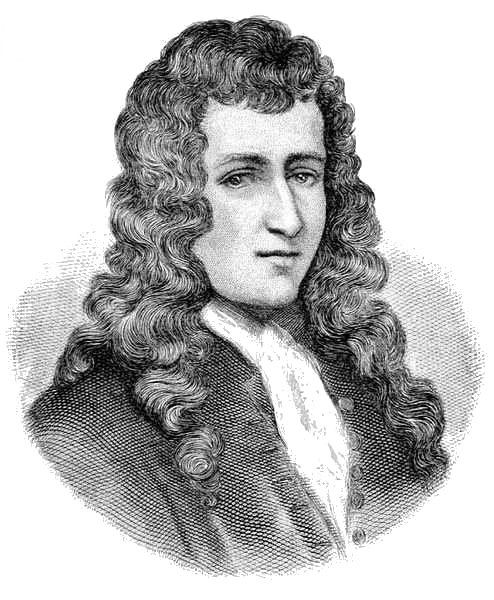
The French explorer Rene-Robert Cavelier, Sieur de la Salle, was the first known European to explore the Mississippi River all the way to the Gulf of Mexico in 1682. La Salle’s parents intended him to serve as a Jesuit priest, but his personality made him unsuitable for the job. He left the Jesuits and followed his brother to New France after he receiving a land grant.  Adventurous, independent, and bullheaded, La Salle started to explore the Great Lakes area in 1669. He came close to his dream of exploring the Mississippi River and finding an opening to the Pacific Ocean but failed in his first attempt. In 1682 and after many difficulties, La Salle’s dream of exploring the Mississippi River finally came true.  This event is recorded on the Bible Timeline with World History during that time.

[This article continues after a message from the authors]
These Articles are Written by the Publishers of The Amazing Bible Timeline
Quickly See 6000 Years of Bible and World History Togetherbible timeline

Unique Circular Format – see more in less space.
Learn facts that you can’t learn just from reading the Bible
Attractive design ideal for your home, office, church …

Limited Time Offer! Find out more now! >

Early Life and Becoming Sieur de La Salle

Rene-Robert Cavelier, Sieur de La Salle, was born on November 21, 1643, in the parish of St. Herbland in the city of Rouen. He was the son of the wealthy landowner Jean Cavelier by his wife, Catherine Geest. His parents were devout Christians, and they had wanted Rene-Robert and his older brother Jean to become priests even when they were young. Jean entered the Order of Saint Sulpice at a young age, while Rene-Robert enrolled at the Lycée Pierre-Corneille in Rouen at age nine.

The young Rene-Robert excelled in academics at the Jesuit-led school. He was also known for his athleticism, independence, and willfulness as a child which made him unsuitable for a life as a priest. He later joined the Jesuits in Paris and in La Fleche. He asked the Jesuits to send him to a mission in China and in Portugal, but he was refused on both instances. He later decided that he did not want to serve as a priest.

The elder Jean Cavelier died in 1666, and unfortunately for Rene-Robert, his father did not leave him an inheritance. Finding himself penniless, Rene-Robert renounced his vows and decided to follow instead his older brother who had emigrated to New France. With the help of an uncle who had become a member of the Company of One Hundred Associates, the young Rene-Robert made his passage to New France in mid to late 1667. He also received a land grant in Montreal from the Sulpicians, and soon adopted the title Sieur de La Salle.

A New Life in New France

La Salle led a modest life as a landowning gentleman in Montreal. He befriended the natives in the area, learned their language, and soon engaged in the fur trade. These natives told him about the presence of the Ohio River which flowed into another body of water. This body of water was the Mississippi River, but La Salle initially believed that it was the Pacific and that it would eventually lead to China.

He became curious and soon grew restless. He yearned for an adventure, but his resources were limited. To fund this adventure, La Salle sold a portion of the land he received to the Sulpicians (from whom he received the land grant) in January of 1669. He then traveled to Quebec to inform the governor of his goal and secure the necessary permit. The governor was only too happy to grant the permit to expand the borders of New France. La Salle, however, was forced by the governor to team up with the Sulpician missionaries Francois Dollier de Casson and Rene de Brehart de Galinee.
First Attempt

Nine canoes bearing La Salle and his companions left Montreal in July 1669. All were novice explorers who were ill prepared and poorly equipped, so they were off to a dismal start. Their lack of knowledge of the natives’ language also made the journey more difficult. The party finally reached Lake Ontario on August 2, and soon encountered the Seneca people which lived on the lower shore of the lake. The tribe was friendly, and they invited the weary and sick travelers to their village to rest.

La Salle then asked the Seneca people to provide him with a guide for the continuation of their journey. This request alarmed the Seneca leaders. If they provided La Salle and his companions a guide, the Frenchmen would then be able to continue their journey. They would then encounter the natives from which the Seneca acquired fur and other products to trade to the Frenchmen. Hence, they would no longer be able to play as the middlemen in the thriving fur trade between other natives and the colonists.

For this reason, the Seneca did not provide a guide to La Salle and discouraged the party from further exploration. The French explorers were delayed for a month until an Iroquois man passed by and offered to guide them from Lake Ontario to Lake Erie. La Salle and his companions, however, were once again delayed when he was bitten by a snake when they arrived near Burlington Bay. They stayed in the area for some time until they encountered the party led by another Frenchman named Louis Jolliet near what is now Hamilton, Ontario.

La Salle told his companions that he would return to Montreal because of his ill health. The men were divided between him and the Sulpician missionaries who proceeded to explore the Great Lakes region. When they parted ways, La Salle then announced to the remaining men that they would continue south to the Ohio River.

In Limbo

The French explorer Rene-Robert Cavelier, Sieur de La Salle, was born on November 21, 1643.

The discovery of the Ohio and Mississippi Rivers was still a far-off dream. La Salle travelled all over Montreal and Quebec between 1670 and 1672, and not—as some contemporaries and biographers claimed—anywhere near the Mississippi River. He returned to Montreal in 1673 and became friends with Governor Louis de Baude Frontenac.

Frontenac wanted to build a fort in the part where the St. Lawrence River flowed into Lake Ontario but did not have the necessary permit from the French king. Instead, he sent La Salle back to France between 1674 and 1675 to obtain the permit. While in the king’s court, La Salle met the politician Jean-Baptiste Colbert who was a friend of King Louis XIV. Colbert convinced the king to support La Salle who soon received the land grant he requested. Louis XIV also gave La Salle the right to manage the fur trade in the area for five years and fund the defenses of the fort with the money derived from the trade.

La Salle returned to New France and took up his new position in the fort which he named after his friend, Governor Frontenac. His ambition led him to become one of the most powerful men in the colony, but this did not sit well with his neighbors. The power and the status, however, did not satisfy him and the expedition to find                                                                     the Mississippi River stayed on his mind.

 The Exploration of the Mississippi River and the Foundation of French Louisiana

La Salle returned to France in 1677 with bigger and bolder requests. He asked Louis XIV to allow him to build forts at the entrance of Lake Erie and Lake Michigan. He also requested that he be allowed to explore further south and claim any land he “discovered” for France, including those abandoned by the natives. Louis XIV eagerly granted the request on March 12, 1678.

La Salle arrived in Quebec on September 15 with Dominique La Motte de Luciere and Henri de Tonti who later became his most trusted lieutenant. He also brought with him several seamen and craftsmen who built a barque for the expedition. The 45-ton boat was named Le Griffon and launched on the 7th of August, 1679. Thirty men, three Recollect missionaries, and a pilot completed Le Griffon’s crew.

The Griffon sailed the Lake Erie and entered Lake Huron after 20 days. La Salle and his crew stayed in the St. Ignace Mission on Mackinac Island and left for Green Bay on the 12th of September. They then engaged in the fur trade with the natives which forced La Salle to send the Griffon back to the French settlement in Niagara with its cargo. The Griffon, however, met with a mysterious end as it disappeared soon after.

La Salle then took 14 men with him and switched to canoes. They paddled from Green Bay to the southeast portion of Lake Michigan until they reached the entrance of the St. Joseph River on the 1st of November. La Salle decided to stay in the area until the arrival of Henri de Tonti on the 20th of November. His men built a crude fort on the bank of the river while La Salle toyed with the idea of waiting for the Griffon to catch up. However, he grew restless, so they continued by paddling upriver until they reached the Kankakee in Illinois.

From the Kankakee, La Salle’s group entered the Illinois River and reached the village of Pimitoui (near present-day Peoria) on January 15, 1680. La Salle befriended the natives and told them that he wanted to build a fort and a barque in the area. The natives agreed but soon changed their minds when an allied Mascouten (Algonquian) chief arrived and convinced them that the Frenchmen were allies of the Iroquois. The villagers then discouraged La Salle and his men from continuing the journey. Some of his men abandoned the group for fear of the dangers upriver, but La Salle remained determined.

The Frenchmen left Pimitoui and paddled upriver until they reached the area that is now Creve Coeur on January 15. La Salle and his men built a fort there and stayed in the area for more than a month waiting for the Griffon to catch up. (He was still unaware that the Griffon was lostperhaps sunk by one of his hired men who then stole the pelts).

By the end of February, La Salle became restless once again. He sent the Recollect missionary Father Hennepin and two other men ahead of him to the junction of the Illinois and Mississippi Rivers. He and his remaining men went back to the mouth of the St. Joseph River to look for his ill-fated barque. No one had heard of or seen the Griffon at St. Joseph, so he and his men were forced to make the difficult overland journey back to Lake Erie on foot. It was the dead of winter, so many of La Salle’s companions fell ill during the journey.

The men arrived in the Niagara area on April 21, 1680, but to his disappointment, they found that the fort had been destroyed and the Griffon was nowhere in sight. They continued to Fort Frontenac and arrived there on the 6th of May so he could settle some of his debts. He later received news that the fort he built in Creve Coeur had been destroyed by the men he left there. They were also on the way back to Fort Frontenac so they could kill him. La Salle preempted the attack and ambushed them before they arrived at the fort.

Any hope that he could recoup his losses disappeared along with the Griffon. La Salle had no choice but to continue the search for the passage to the Pacific in hopes that this would bring him the wealth and fame he so desired. On August 10, 1680, he set out on another journey along with 25 men he hired. La Salle’s fleet entered the Humber River after sailing in Lake Ontario, and from there entered Lake Simcoe. They then entered the Severn River and crossed the Georgian Bay to arrive at the Sault Ste. Marie area on September 16.

The group hastened to Fort St. Joseph and paddled upriver to the village of Pimitoui. They arrived on the 1st of December but found the village sacked and its inhabitants massacred by Iroquois warriors. La Salle worried that his lieutenant and close friend Henri Tonti was one of the victims. The company raced upriver to look for survivors and found that the Iroquois had also rampaged in the surrounding area. La Salle was disheartened when he failed to find his friend and had to return to Fort St. Joseph in January 1681 to wait for further news. He sent a letter addressed to Tonti to the Saint Ignatius mission on Mackinac Island just in case Tonti had ventured there.

News that Tonti was safe and had been spotted with the Potawatomi people reached him later on. He sent Tonti a message and told him to meet him at Michilimackinac in May. By the end of May, the two friends were finally reunited. Tonti, however, told him that Father La Ribourde (one of the missionaries who joined La Salle’s expedition) was murdered by some Kickapoo warriors. La Salle was later summoned by Governor Frontenac and together, they traveled back to Montreal.

La Salle spent the rest of 1680 and the greater part of 1681 in Montreal and Quebec. He was hounded by creditors, so he drew up a will and specified that he would leave any asset he had just in case he died in the expedition. He increasingly felt alienated in both colonies when he was accused as the instigator of the war that flared out between the Iroquois and the Algonquian-speaking Illiniwek people after he traded with the Outaouais (Odawa).

He set out on another expedition in late 1681 with a crew composed of 41 Frenchmen and natives. He met Henri Tonti at the fort along the St. Joseph River on December 19 and the group paddled their canoes upriver until they reached Creve Coeur one month later. On February 6, 1682, La Salle finally realized his dream when he and his companions entered the Mississippi River. They, however, were forced to camp out for some time along its bank because of the river had turned to ice.

La Salle and his men continued their journey after one week but were forced to break the ice along the way so they could continue. Icy conditions forced them once again to set up a camp when they reached the junction of the Mississippi and Missouri Rivers. They broke camp sometime later and rowed once again until they reached the confluence of the Ohio and Mississippi Rivers.

They stayed for ten days in present-day Memphis to wait for one of the men who lost his way while looking for food. La Salle, always restless, directed his men to build a fort which he later named Prudhomme. They continued their journey on the 5th of March but were forced to stop when they heard war cries and drums from the Arkansas side of the Mississippi River. To La Salle’s relief, the tribe which flocked along the banks of the Mississippi turned out to be friendly. He befriended them and they stayed briefly in their camp. He then claimed the land for his patron, King Louis XIV.

The members of the tribe were so friendly and affectionate to La Salle and his crew that they were forced to tear themselves away from them just to continue their journey. Two members of the tribe accompanied La Salle and his crew down the Mississippi, and they soon came upon its confluence with the Arkansas River.

On the 22nd of March, La Salle’s group camped out with the friendly Taensa (Tensaw) people. They continued their journey after staying with Taensa for some time. They soon came across the Koroa people who told them that the ocean was only a few days away from the camp. They left the Koroa camp on the 29th of March and finally arrived in the Mississippi River delta on the 6th of April, 1682. On April 9, La Salle claimed the land for France and named it “Louisiana” in honor of King Louis XIV.

References:

Picture by http://www.ifremer.fr/envlit/actualite/20030401.htm, Public Domain, Link

Busbee, Westley F., Jr. Mississippi: A History. 2nd ed. Chichester, West Sussex, UK: John Wiley & Sons, 2015.

Carsten, F. L., ed. The New Cambridge Modern History. Vol. 5. The New Cambridge Modern History. Cambridge: Cambridge University Press, 1961. doi:10.1017/CHOL9780521045445.

Dupre, Celine. “Biography – CAVELIER DE LA SALLE, RENÉ-ROBERT – Volume I (1000-1700) – Dictionary of Canadian Biography.” Home – Dictionary of Canadian Biography. Accessed August 15, 2017. http://www.biographi.ca/en/bio/cavelier_de_la_salle_rene_robert_1E.html.

Galloway, Patricia Kay. La Salle and His Legacy: Frenchmen and Indians in the Lower Mississippi Valley. Jackson: University Press of Mississippi, 2012.

Hannan, Caryn. Illinois Biographical Dictionary. Hamburg, MI: State History Publications, 2008.

These Articles are Written by the Publishers of The Amazing Bible Timeline with World History. Quickly See Over 6000 Years of Bible and World History Togetherbible timeline
  • Unique circular format - over 1,000 references at your fingertips on this wonderful study companion
  • Discover interesting facts - Biblical events with scripture references plotted alongside world history showcase fun chronological relationships
  • Attractive, easy to use design - People will stop to look at and talk about this beautifully laid out Jesus history timeline poster ideal for your home, office, church ...
  • Click here to find out more about this unique and fun Bible study tool!
Leave a Reply

Your email address will not be published. Required fields are marked *